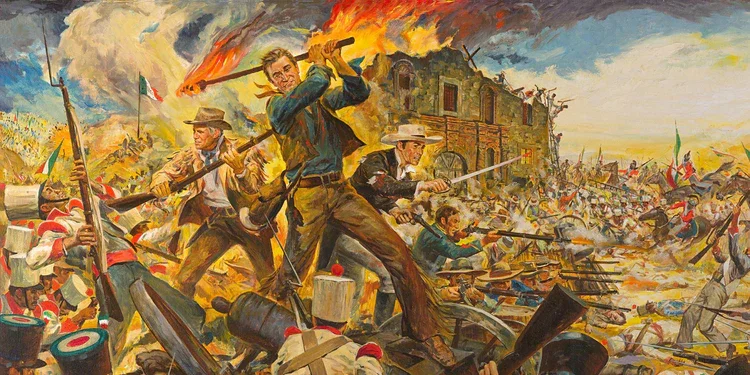
Gone to Texas: Lone Star Rising
The year is 1835. Tensions between Texian settlers and the Mexican government have reached a breaking point. Cultural clashes, political disagreements, and the tightening grip of Santa Anna’s Centralist regime have ignited rebellion across the province of Texas. Tejanos and Anglo settlers alike whisper of independence, while Mexican loyalists vow to crush the uprising before it spreads.
The delegates find themselves in the heart of this turmoil. The Alamo has not yet fallen, San Jacinto has not yet been fought, and the Republic of Texas has not yet been declared. Nothing is certain. Every decision made in this committee could alter the course of history.
Some voices call for compromise, greater autonomy within Mexico, a return to Federalist principles, and coexistence between settlers and the government. Others demand full independence, willing to risk annihilation to break free from Santa Anna’s rule. Still others see opportunity in chaos: to seize land, power, or influence while the revolution rages.
The committee thrives on these competing visions. Delegates may represent Texian leaders, Tejano revolutionaries, Mexican generals, Federalist reformers, or foreign observers. Each faction holds leverage, but none can dictate the outcome alone. Alliances must be forged, betrayals endured, and strategies improvised.
The question is not simply whether Texas will win independence. It is whether the revolution will end in compromise, collapse, or conquest. Could Mexico have preserved its northern frontier through reform? Could Texians have built a republic that included Tejanos as equals? Could foreign powers, like the United States or Britain, have intervened to reshape the destiny of the region? The question is not simply whether Texas will win independence. It is whether the revolution will end in compromise, collapse, or conquest. Could Mexico have preserved its northern frontier through reform? Could Texians have built a republic that included Tejanos as equals? Could foreign powers,like the United States or Britain,have intervened to reshape the destiny of the region?
History tells us the Republic of Texas emerged in 1836, unrecognized by Mexico and setting the stage for the Mexican-American War. But in this committee, history is no longer fixed. Delegates hold the power to rewrite the revolution’s outcome, toward peace, toward empire, or toward a darker fate.
Crisis Directors

Darren Jimenez

Dalal Allaz
Rules and Procedure
This committee follows parliamentary procedure as defined in our Crisis Committee Parley Pro Document. However, procedure during committee may be modified at the Moderator’s discretion.
Position Paper
All delegates wishing to be considered for an award must submit a position paper before the start of conference. Position paper quality will be included in consideration of awards, however paper quality will not hold as much weight in award consideration as actual committee performance. Position papers are meant to ensure a basis for delegate research and help delegates feel confident while participating during the conference.
Detailed instructions for writing and submitting Position Papers can be found in the Position Paper Guidelines Document.
Questions
If you have questions about committee content or the format of your committee, please contact your Crisis Director at contact@ctmun.org with “Gone to Texas: Lone Star Rising” in the subject line.
For questions about CTMUN conference and logistics, please contact contact@ctmun.org.