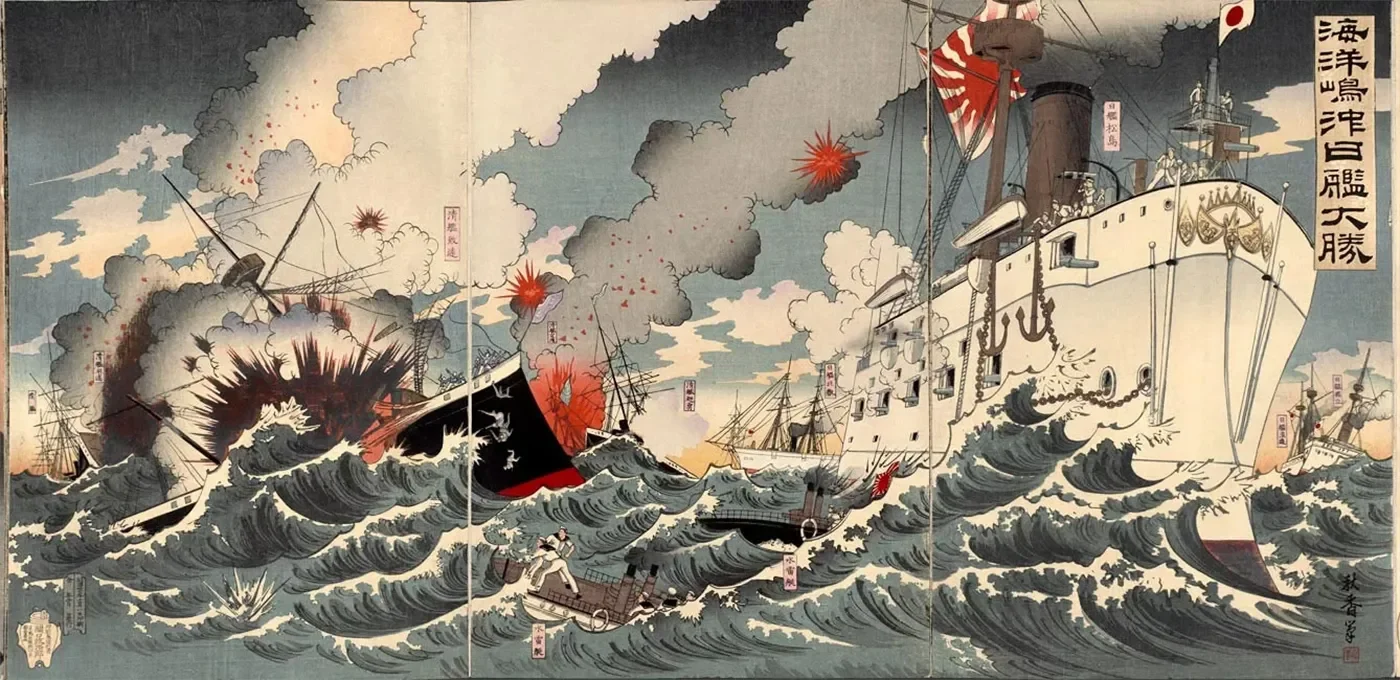
The First Sino-Japanese War: Japan
The year is 1894, and a new sun rises across East Asia. The age of the Tokugawa Shogun is merely a fading memory, replaced by a new entity: the Empire of Japan. By tearing down the walls of sakoku and ending centuries of isolation, Japan committed itself to a path of rapid political, social, and military reorganization. The Meiji Restoration saw the dismantling of the Japanese feudal system and the samurai class, the centralization of power under the Emperor, and a relentless drive towards rapid industrialization. In just one generation, the era of the katana has been replaced by the era of the steamship and the bolt-action rifle. This new imperial age has transformed Japan from an isolationist backwater to the most organized and technologically advanced power in East Asia, capable of standing up to Western powers and projecting power beyond its shores.
Yet while Japan has modernized, the Joseon Kingdom of Korea remains trapped between internal rebellion and external pressure from the Qing Dynasty of China. While Japan sees Korea as a valuable partner for progress, the Qing view Korea as a mere tributary state, doing everything in their power to keep Korea poor and underdeveloped. Though Japan has made strides to foster pro-reform movements across the peninsula, all attempts have been met with Chinese interference and violence. These clashes have only continued to increase tensions between Japan and China.
But now, these tensions have finally snapped. The recent capture of the pro-Japanese reformer Kim Okkyun, whom Japan has offered support and shelter for the past decade, by Qing agents and their decision to send thousands of troops to suppress the Tonghak Peasant Rebellion in Korea present an indisputable national security risk that must be addressed. Right now, Korea is a “dagger pointed at the heart of Japan,” a territory that could serve as a valuable resource or a staging ground for our enemies. In this committee, you stand at a crossroads, and Japan’s future remains in your hands. And though the future seems murky, one thing remains clear: the era of Qing supremacy is over. The age of the rising sun is now.
Crisis Director

Anvesh Polamuri
Rules and Procedure
This committee follows parliamentary procedure as defined in our Crisis Committee Parley Pro Document. However, procedure during committee may be modified at the Moderator’s discretion.
Position Paper
All delegates wishing to be considered for an award must submit a position paper before the start of conference. Position paper quality will be included in consideration of awards, however paper quality will not hold as much weight in award consideration as actual committee performance. Position papers are meant to ensure a basis for delegate research and help delegates feel confident while participating during the conference.
Detailed instructions for writing and submitting Position Papers can be found in the Position Paper Guidelines Document.
Questions
If you have questions about committee content or the format of your committee, please contact your Crisis Director at contact@ctmun.org with “The First Sino-Japanese War: Japan” in the subject line.
For questions about CTMUN conference and logistics, please contact contact@ctmun.org.